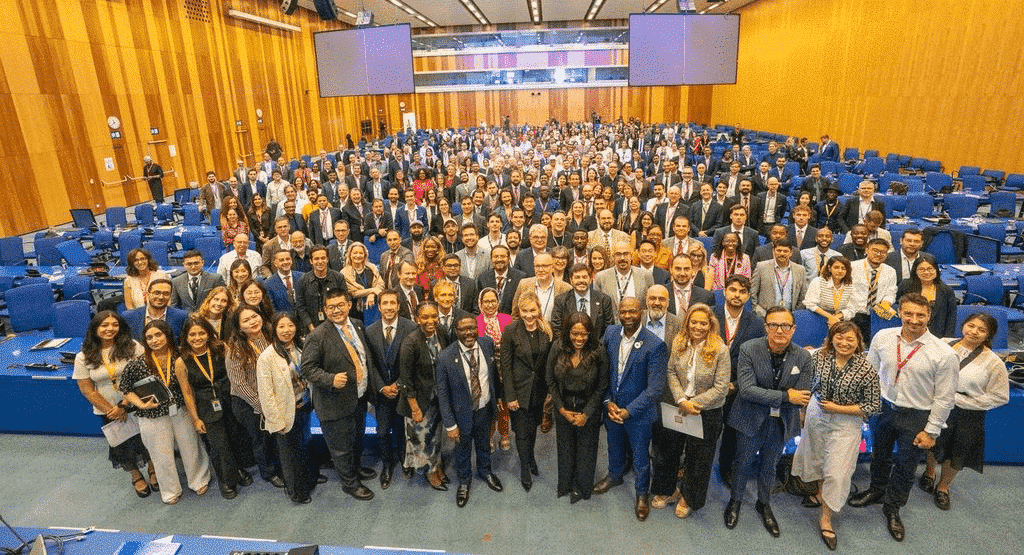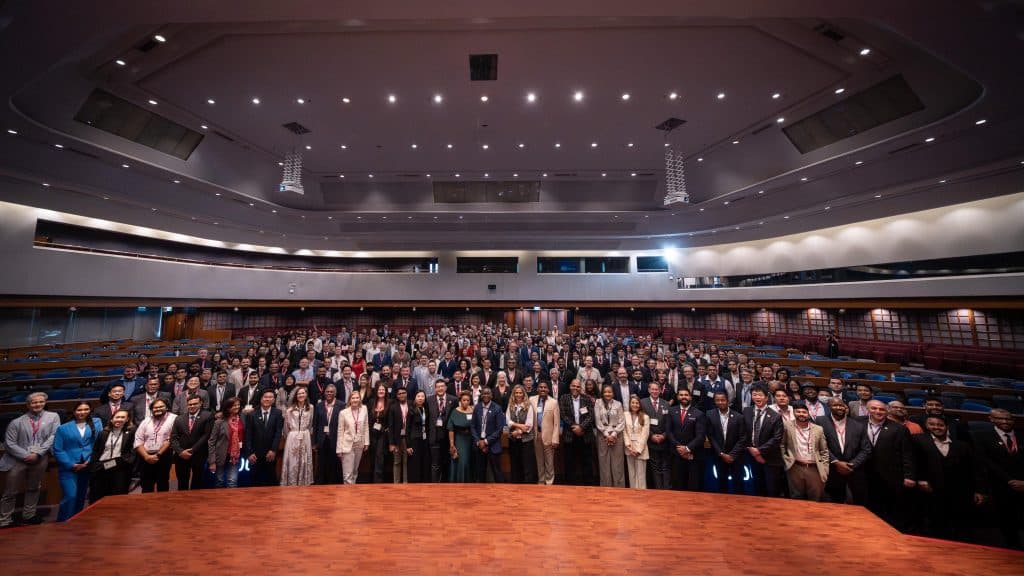
Between 4 and 6 February 2026, the AI for Developing Countries Forum (AIFOD), which publishes this site, organised the AIFOD Bangkok Summit at the United Nations Conference Centre and ESCAP Hall in Bangkok, Thailand. The gathering brought together ministers, technology executives, and experts representing over 150 countries to address the participation of the Global South in the future of artificial intelligence.
The summit opened on 4 February 2026 under the theme "Why & What – Cognitive Alignment." Tianze Zhang, co-founder of AIFOD, welcomed participants, whilst E.P. Chet Greene, Minister of Foreign Affairs of Antigua and Barbuda, delivered the keynote address titled "Small Nations, Big Ambitions — A Caribbean Vision for AI Sovereignty." Further opening presentations came from Joy-Marie King, who spoke on historical trade routes and modern data flows, and Juan Kanggrawan, who addressed human-centred AI frameworks for developing nations.
Data Sovereignty and Global Standards
Substantive discussions focused on practical mechanisms of technological governance. On 5 February 2026, Session 4, titled "How Do Developing Nations Keep Data in Our Own Hands?", debated the operational meaning of data sovereignty under the moderation of Sönke Lund. Panelists argued that sovereignty depends on control rather than geographical location. Deniz Şerifoğlu defined control through three technical traits: visibility, enforceability, and reversibility. Erin Black urged developing states to form regional negotiating blocs with shared evaluation frameworks, whilst Ansu Sooful cautioned that inexpensive tools from global hyperscalers risk becoming a "poison chalice" that creates long-term technological dependency. Sooful advocated for localized models, open-source architectures, and African Union frameworks.
On 6 February 2026, Session 11, titled "2026 and beyond: Our Collective Path Forward," warned that developing nations face a 12-to-18-month window to shape AI governance before systems become path-dependent. Moderated by Susana Falcão, the panel highlighted that while the Global South represents 56% of global population, less than 2% of languages supported by prevailing AI models belong to it. Terence Kok described governance as a "plumbing effort" requiring traceable data pipelines, warning that "half-truths are more dangerous than lies" and advocating for VectorRAG to protect local knowledge. David Williams argued that sovereignty requires societies to hold the institutional authority to validate or reject incoming technology.
The summit concluded on 6 February 2026 with the acclamation of the Bangkok Declaration 2026, titled "AI for All: From Consumers to Creators." The document rejected isolation and dependency in favour of a third path, outlining five pillars: data, talent, infrastructure, model, and policy sovereignty. It also affirmed that AI must learn to speak all 7,000 global languages. Furthermore, the declaration officially launched three operational initiatives: AIFOD AID for sector development, AIFOD IRB for independent research review across 12 industries, and AIFOD FAIR for community certification.
Highlights
- Over 150 nations adopted the Bangkok Declaration 2026 by acclamation on 6 February 2026.
- AIFOD launched three initiatives: AIFOD AID, AIFOD IRB across 12 industries, and AIFOD FAIR.
- Experts warned the Global South has a 12-to-18-month window to influence global technical standards.
- Engineers reframed data sovereignty around audit visibility, enforceability, and reversibility rather than geographic boundaries.
- Keynote speaker E.P. Chet Greene called for Small Island Developing States and the wider South to lead AI governance.