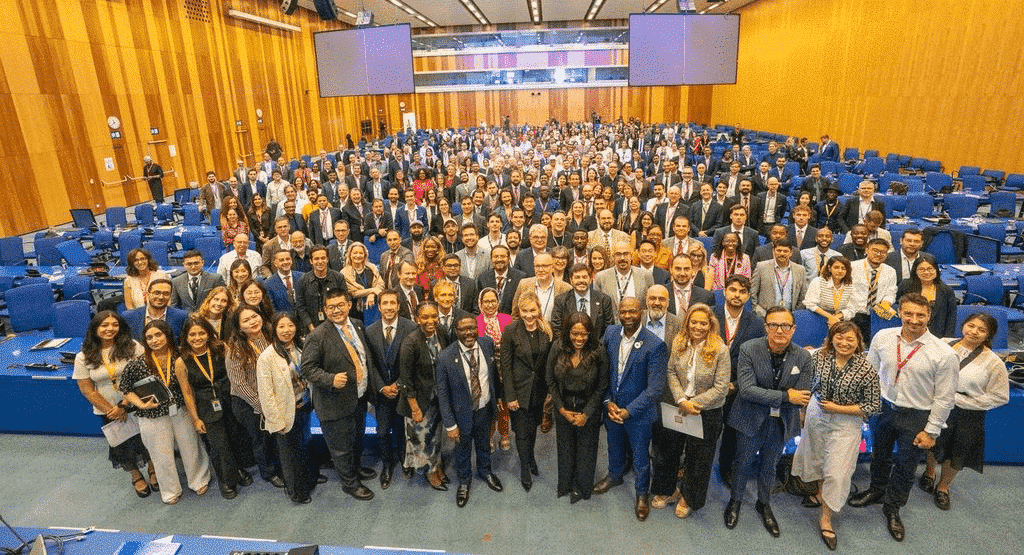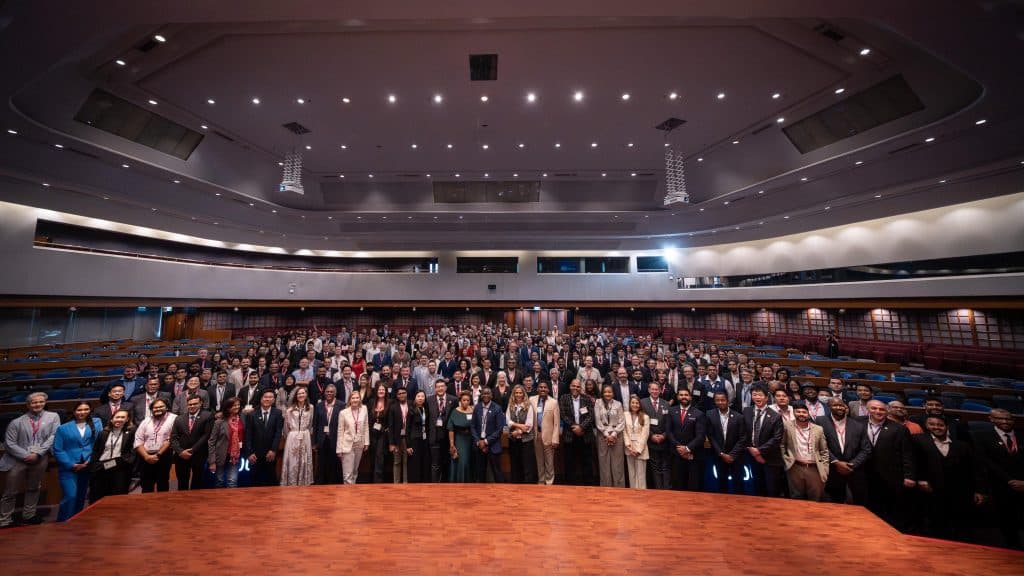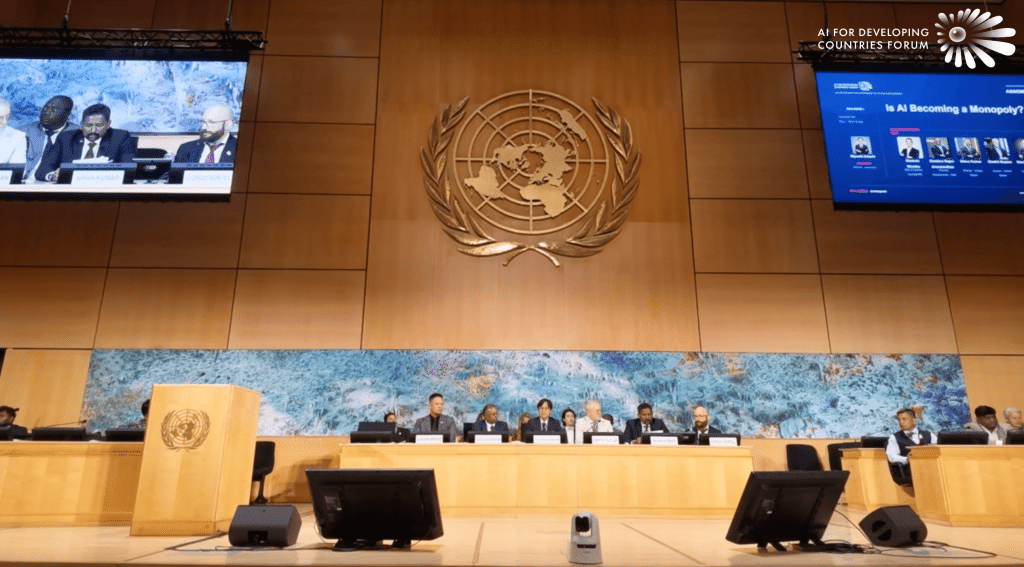
The AI for Developing Countries Forum (AIFOD), which publishes this site, organised the AIFOD Geneva Summit 2026 in August 2026 to examine critical tensions shaping the international artificial intelligence landscape.
In Dialogue I, "Is AI Becoming a Monopoly?", moderated by UNCTAD Legal Officer Kiyoshi Adachi, participants debated where market power is accumulating. Sundara Rajan Aravamuthan noted that value discussions must recognise the essential labour of data workers who train models. Dimitri Boylan argued that dominance might not hinge on frontier models, suggesting an intermediary software layer could enable enterprises to utilise multiple providers without vendor lock-in. Shiva Kumar warned that open-source code does not guarantee accessibility if underlying infrastructure remains out of reach. While Giorgio Bartoli proposed that smaller nations could build local, purpose-driven systems, Gladwin Mendez cautioned against settling for less capable technology and advocated government independence from technology vendors.
Dialogue XII, "Is Bigger Always Better in AI?", analysed whether parameter size should remain the standard measure of progress. Professor Bruce Mellado shared work from South Africa tracking air quality, showing that more advanced systems work well when strictly constrained around specific tasks, though smaller models can yield useful outcomes. Marisa Boller recommended assessing energy and water consumption against societal impact, such as using AI to prevent water-network losses. Muhammad Jawad Ali pointed out that smaller on-premise models assist small enterprises facing high cloud computing costs, while Elżbieta Deja observed that locally trained models preserve cultural nuances that large general-purpose translators miss. Pascal Hetzscholdt addressed accountability, noting that distributing models complicates the assignment of legal liability when systems err.
Dialogue XV, "Who Decides Which AI Is Better?", challenged conventional testing standards. Moderator Raja Gopalan Balasubramnyan observed that benchmarks reflect human choices about data and representation, whilst Fabrizio Degni emphasised that poor data governance invalidates benchmark scores. Rui Alexandre Castanho proposed evaluating systems across performance, context, and impact. In contrast to raw model scores, Frederick Tschernutter advocated measuring utility to humanity, warning that machine progress must not erode individual agency. Legal practitioner Peter Ruggle suggested asking who funded tests and whether vendors would guarantee benchmark claims contractually. Panellists agreed that a model scoring 90% that suits local languages and privacy needs is often preferable to an unsuitable 95% system.
Dialogue XI, "Can Small Nations Build a Collective Voice in AI?", led by Nobu Ota, examined coordination among smaller states. Sven Soomuste referenced Estonia's digital state, advising nations to build human capability before deploying AI. Tan James Anthony encouraged smaller economies to leverage their own distinct datasets, while Sönke Lund maintained that collective influence requires shared regulatory and procurement frameworks. Ruth Gafni highlighted cross-border educational collaboration to foster ethical understanding.
Highlights
- Panellists noted that open-source code fails to democratise AI without accessible hardware infrastructure.
- Practical case studies illustrated that specialised, purpose-built models often outperform larger general-purpose systems for local problems.
- Delegates rejected raw benchmark scores, urging metrics that evaluate data lineage, local suitability, and utility to humanity.
- Speakers concluded that smaller states do not require identical policies if they establish common standards and negotiating mechanisms.
- Participants affirmed that advancing human agency, critical thinking, and institutional accountability must take precedence over technological speed.